

Overview:
Rajgir hills in Nalanda district are emerging as an important winter refuge for migratory birds. Two recent surveys by Bihar’s Environment, Forest and Climate Change Department recorded 135 bird species, including 33 migratory species, with highlights such as Eurasian Sparrowhawk, Indian vulture, and 11 warbler species. The article explains why Rajgir’s varied habitats and improved water management attract birds from Europe and Central Asia, offers birdwatching tips, and outlines the role of Rajgir Zoo Safari in conservation. It also discusses threats like habitat change and climate pressure and shares practical steps that tourists, farmers, and students can take to safeguard this new bird haven.
This winter, Rajgir hills in Bihar are full of wings, colour, and sound. Flocks of Rajgir migratory birds are arriving from as far as Europe and Central Asia. They join the local birds in forests, fields, and quiet water bodies around the famous Rajgir Zoo Safari and Nature Safari.
A two-phase survey by Bihar’s Environment, Forest and Climate Change Department found 135 bird species, including 33 migratory birds, using the Rajgir hill landscape. This is more than ever recorded here before.
In this guide, you will learn what makes Rajgir special for birds, which rare species visit, how the surveys were done, and how you can enjoy bird watching here in a safe and responsible way.
Rajgir hills: a new home for migratory birds
Rajgir, in Nalanda district of Bihar, is already famous for its ancient history and holy hills. Now it is also rising as a major birding destination in Bihar. Forests, rocky slopes, grasslands, paddy fields, and small wetlands all sit close together here. This mix gives birds many safe places to rest and feed.
During winter, cold winds push birds away from frozen lands in Europe and Central Asia. Rajgir’s hills stay cooler than the plains but do not freeze. So the area acts like a warm, green island on long migratory routes. Birds can stop, eat insects or berries, and build strength before they move on or stay for the full season.
Because the hills surround a bowl-shaped valley, sounds travel far. Early in the morning, the entire valley often rings with warbler calls, thrush songs, and the cries of hunting raptors. For visitors, this creates a calm and almost magical winter scene.
How the Rajgir bird surveys were done
To understand this new bird haven better, the Environment, Forest and Climate Change Department carried out bird surveys around Rajgir Zoo Safari, Nature Safari, and the adjoining wildlife sanctuary.
Officials and expert birdwatchers walked and drove along fixed routes. They covered different habitats such as:
- Hill slopes and forest edges
- Paddy fields and marshy patches
- Reed beds and small ponds
- Scrublands and rocky outcrops
Observers used binoculars and cameras. They also noted bird calls and behaviour. Because many warblers and thrushes hide in bushes, calls were very important.
Two main survey phases took place:
- February 2025 – near the end of winter
- December 2025 – early winter, during peak migration
By repeating the survey in different months, the team could compare changes in numbers and species. This helps them see which birds are regular visitors and which ones are rare or new to the area.
Survey findings: Rajgir migratory birds at a glance
The results show that Rajgir hills are now a strong winter refuge for both resident and migratory birds.
Big picture numbers
- February 2025 survey
- 109 bird species recorded
- 29 of these were migratory birds
- December 2025 survey
- 135 bird species recorded
- 33 of these were migratory birds
So, between the two surveys, total species went up by 26, and migratory species increased by four. This suggests that habitat quality is either stable or improving. It also shows that more long-distance migrants are now choosing Rajgir as a safe stopover or winter home.
Survey comparison table
| Survey Phase | Month & Year | Total Species | Migratory Species | Some Highlight Species |
|---|---|---|---|---|
| Phase 1 | Feb 2025 | 109 | 29 | Sulphur-bellied Warbler, Yellow-browed Warbler, Tickell’s Leaf Warbler, Indian Vulture, Griffon Vulture |
| Phase 2 | Dec 2025 | 135 | 33 | Eurasian Sparrowhawk, Scaly Thrush, Orange-headed Thrush, Siberian Stonechat, Long-legged Buzzard, Eurasian Kestrel |
These findings place Rajgir firmly on the map of important wintering grounds for migratory birds in Bihar and in the wider Indian subcontinent.
Star visitors: raptors, thrushes and warblers
Many bird lovers visit Rajgir to see rare or hard-to-spot species. The surveys revealed several exciting groups.
Raptors and vultures from faraway lands
Raptors are birds of prey. They hunt other animals with sharp talons and strong beaks. In Rajgir, the survey teams noted:
- Eurasian Sparrowhawk – recorded in Nalanda district for the first time
- Himalayan Buzzard
- Long-legged Buzzard
- Bonelli’s Eagle
- Black-winged Kite
- Crested Hawk-Eagle
- Crested Serpent Eagle
- Eurasian Kestrel
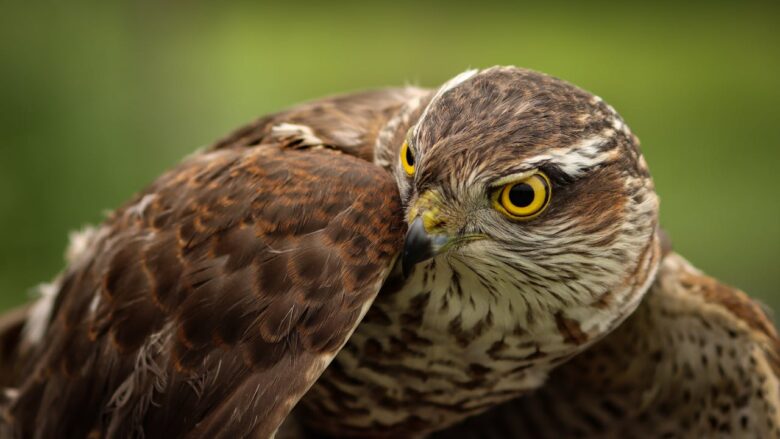
The Eurasian Sparrowhawk was the most remarkable sighting. It usually breeds in Europe and parts of Central Asia. Its arrival in Rajgir confirms that the hills lie on an international flyway, a broad sky route that birds follow every year.
Even more encouraging is the presence of Indian vulture and griffon vulture, both threatened species. Their appearance suggests that some cliffs and feeding areas in Rajgir hills still support these large scavengers.
Thrushes and colourful forest songbirds
Thrushes are medium-sized songbirds that love shady, moist forests. The surveys reported several attractive species, including:
- Scaly Thrush
- Orange-headed Thrush
- Tickell’s Thrush
- Indian Pitta – known for its many bright colours
- Large Hawk-Cuckoo
- Siberian Stonechat
These birds often travel from cooler forests and grasslands in the north. They use Rajgir’s wooded valleys, groves, and orchard edges as feeding grounds. Many arrive silently at night and reveal themselves with soft calls at dawn.
Warblers and wetland specialists
One of the strongest signs of Rajgir’s health is its warbler diversity. Warblers are small, insect-eating birds that flick their tails and hop through bushes and reeds. The surveys counted 11 warbler species across fields, wetlands, scrub, and forest edges.
Recorded warblers included:
- Booted Warbler
- Paddyfield Warbler
- Blyth’s Reed Warbler
- Sulphur-bellied Warbler
- Dusky Warbler
- Yellow-browed Warbler
- Tickell’s Leaf Warbler
- Common Chiffchaff
- Greenish Warbler
- Hume’s Warbler
- Clamorous Reed Warbler
Such variety suggests three good things:
- Many different habitat types exist close together.
- There are plenty of insects to eat.
- Chemical pollution, especially from pesticides, is still relatively low in key feeding spots.
Why Rajgir attracts migratory birds from Europe and Central Asia
A safe stop on long flyways
Every year, millions of birds travel along global flyways. These are broad paths in the sky that connect breeding grounds in the north with winter homes in the south. Rajgir sits in eastern India, between the Ganges plains and the hill belts. This location makes it a natural stop on routes that link Europe and Central Asia to the Indian subcontinent.
Because the hills form a ring, they reduce wind and give shelter. Birds can rest on rocky ledges, forest branches, and reed beds without facing harsh weather.
Rich mix of habitats in a small area
In and around Rajgir hills you find:
- Dry and moist deciduous forests
- Bamboo patches and scrubland
- Rocky cliffs and ledges
- Marshy wetlands and small reservoirs
- Paddy fields and other farmlands
Each habitat supports a different set of birds. When all of these sit close together, even a small area can hold many species. That is why surveys found over 100 species within a relatively compact landscape.
Better water and habitat management
Forest officials say that soil and moisture conservation work has increased water levels in local reservoirs. Small dams and careful planting help hold rainwater in the hills. As a result, marshes and ponds stay wet for longer into the dry season.
For birds, this means:
- More fish, insects, and plants to feed on
- Safe places to drink and bathe
- Cool spots to rest during hot afternoons
These efforts by the Forest Department are one key reason why more migratory birds now choose Rajgir as a winter base.
Bird watching in Rajgir: tips for visitors
Rajgir is easy to reach by road and rail from Patna, Gaya, and other cities. Because of this, it is a perfect place for simple weekend bird watching.
Best time to visit
For winter migratory birds, the ideal months are:
- Late November to early March – peak season
- Early morning and late afternoon – best light and bird activity
During this period, you can see both local and foreign birds sharing the same trees and water bodies.
Good birding spots in Rajgir
Some key areas for bird watching in Rajgir include:
- Rajgir Zoo Safari – forest edges, water bodies, and open patches
- Nature Safari Rajgir – quieter trails with less disturbance
- Nearby wildlife sanctuary zones – with proper permission and guides
- Paddy fields and marshes at the base of the hills
- Viewpoints on the hills – great for spotting raptors and vultures circling overhead
Simple birding tips
To enjoy birds without disturbing them, you can:
- Walk slowly and stay quiet
- Wear dull, earthy colours instead of bright clothes
- Use binoculars rather than moving too close
- Turn phone sounds off and keep voices low
- Stay on paths and avoid entering sensitive nesting areas
If you hire a local guide, they can help you identify tricky species like warblers and thrushes. This also supports the local economy and encourages more people to value birds.
How Rajgir Zoo Safari supports bird conservation
Rajgir Zoo Safari was first built to showcase mammals and other large wildlife. However, it now also works as a gateway to the wider Rajgir wildlife sanctuary and its rich birdlife.
Training for safari guides
Safari guides receive special training to:
- Recognise key migratory birds by sight and sound
- Explain migration journeys to visitors in simple language
- Share basic conservation messages, such as the dangers of pesticides and plastic waste
Because of this, visitors do not just see animals. They also learn about the long journeys that bring European and Central Asian migratory birds to Bihar every winter.
From mammal park to bird haven
The Zoo Safari and nearby Nature Safari now promote not only tigers, lions, and deer, but also birds. Their websites and boards often highlight colourful resident birds and seasonal visitors.
As a result, bird calls and songs have become a key part of the visitor experience. People who first come to see big animals often leave with renewed interest in birds and forests. This shift supports long-term conservation.
Threats and challenges for birds in Rajgir hills
Even with these positive signs, birds in Rajgir face some risks.
Habitat change and disturbance
As tourism grows, noise, litter, and unplanned construction can push sensitive birds away. Paths cut too close to nesting cliffs or wetlands may disturb feeding and breeding.
If farmlands switch to heavy pesticide use, warblers and other insect-eating birds may lose their food sources. That is why the current high warbler diversity is such an important signal of relatively low chemical pressure so far.
Climate change
Changing rainfall patterns and rising temperatures can alter migration timing. If wetlands dry too early, birds may reach Rajgir and find little food or water. Long-term monitoring is needed to understand these shifts and plan for them.
Human-wildlife conflict
Vultures and raptors sometimes face risk from poisoned carcasses, electric wires, or collision with structures. Education and safe carcass-dump zones can lower these dangers.
How people can help protect migratory birds in Bihar
Everyone has a role to play in keeping Rajgir safe for birds. Small steps add up.
For local communities and farmers
- Use fewer chemical pesticides and fertilisers when possible
- Leave some hedges, trees, and ponds untouched as bird refuges
- Avoid burning crop stubble near key wetlands
- Report wounded or trapped birds to forest officials quickly
For tourists and birdwatchers
- Follow park rules and guide instructions
- Keep noise low and never chase birds for photos
- Carry back all plastic and food wrappers
- Support local eco-friendly homestays, guides, and shops
For schools and colleges
- Organise bird walks and nature clubs
- Invite experts to speak about bird conservation in Bihar
- Run drawing or essay contests on migratory birds
- Encourage students to keep simple bird lists and share them with forest staff
When people see birds as guests and partners, not just pretty sights, they are more likely to protect the forests and waters that keep these visitors coming back.
Key Takeaways
- Rajgir hills in Bihar now host 135 bird species, including 33 winter migratory birds from Europe and Central Asia.
- Two recent surveys show rising diversity, with warblers, thrushes, raptors, vultures, and many other species using the Rajgir landscape.
- The first-time record of the Eurasian Sparrowhawk in Nalanda proves that Rajgir lies on an important international migratory route.
- Soil and moisture conservation, along with better water management, is helping create ideal winter habitat for birds at Rajgir Zoo Safari and nearby areas.
- Responsible tourism, reduced chemical use, and strong local engagement can keep Rajgir migratory birds safe and returning year after year.
Did You Know?
In the latest survey, Rajgir hills recorded 11 different warbler species in one season. That is a remarkable number for such a compact landscape and shows just how rich and varied its habitats are.
Conclusion
Rajgir has always been a place of stories, faith, and hills. Now it has a new story to tell, carried on wings from faraway lands. With 135 bird species and 33 migratory visitors, the hills have become a vital winter refuge on global flyways connecting Europe, Central Asia, and India.
If forest managers, local people, and visitors work together, Rajgir can stay a safe and colourful haven for Rajgir migratory birds. Each careful step on a trail, each field kept friendly to insects, and each clean pond will help these travellers return to Bihar’s hills every winter.
FAQs
Rajgir hills now host a mix of local and long-distance migratory birds, including species that travel from Europe and Central Asia. Recent surveys recorded 135 species, with 33 migratory birds using the area in winter. The presence of rare warblers, raptors, and vultures makes Rajgir a unique birding hotspot in Bihar.
The best time to watch migratory birds in Rajgir is from late November to early March. During these months, winter visitors join resident birds in wetlands, forests, and fields. Early mornings and late afternoons are ideal, because birds are most active then and the light is soft for viewing and photography.
The Eurasian Sparrowhawk was recorded in Nalanda district for the first time during the December 2025 survey. This species breeds mainly in Europe and Central Asia. Its presence proves that Rajgir lies on a major international migratory route, linking those regions to the Indian subcontinent, and highlights the global ecological value of the area.
Visitors can look for many groups. Raptors include Himalayan Buzzard, Bonelli’s Eagle, Long-legged Buzzard, and Eurasian Kestrel. Vultures such as Indian vulture and griffon vulture may soar above cliffs. In shady forests, birdwatchers can find Scaly Thrush, Orange-headed Thrush, and Indian Pitta. Wetlands and fields host diverse warblers and the Siberian Stonechat.
Tourists can help by staying quiet on trails, keeping a safe distance from birds, and not littering. They should follow park rules, avoid using loud music or drones, and support trained local guides. Choosing eco-friendly stays and reducing plastic use also protects habitats. Simple respect for birds and their spaces goes a long way in conserving Rajgir’s winter guests.
References
The Hindu (via social and partner coverage) – https://www.thehindu.com
Indian Masterminds – https://indianmasterminds.com/news/rajgir-bihar-migratory-birds-survey-europe-central-asia-174414/
Navbharat Times – https://navbharattimes.indiatimes.com/state/bihar/nalanda/rajgir-wildlife-migratory-birds-eurasian-sparrowhawk-spotted-first-time-nalanda/articleshow/126367219.cms
